From one hill to another
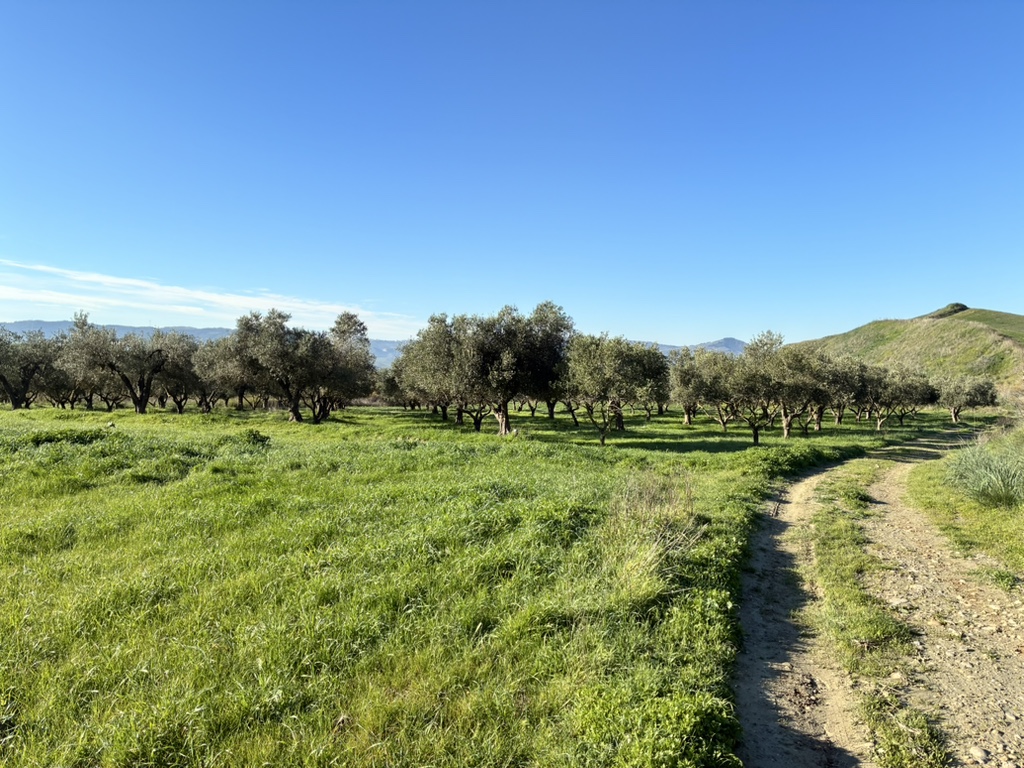
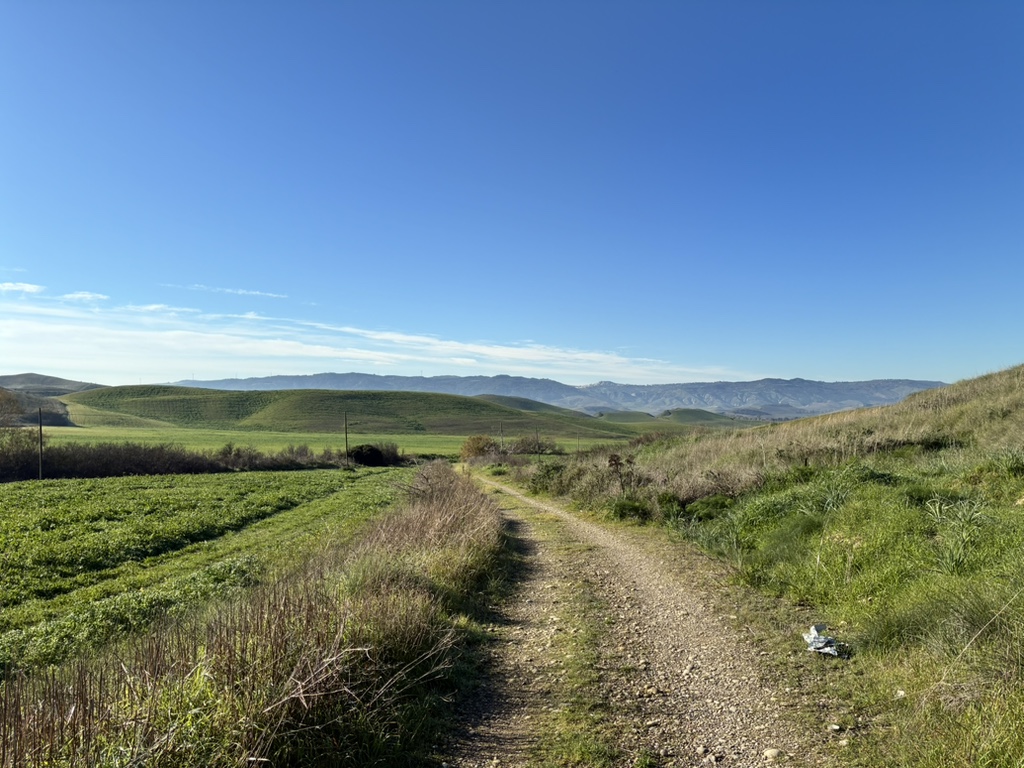
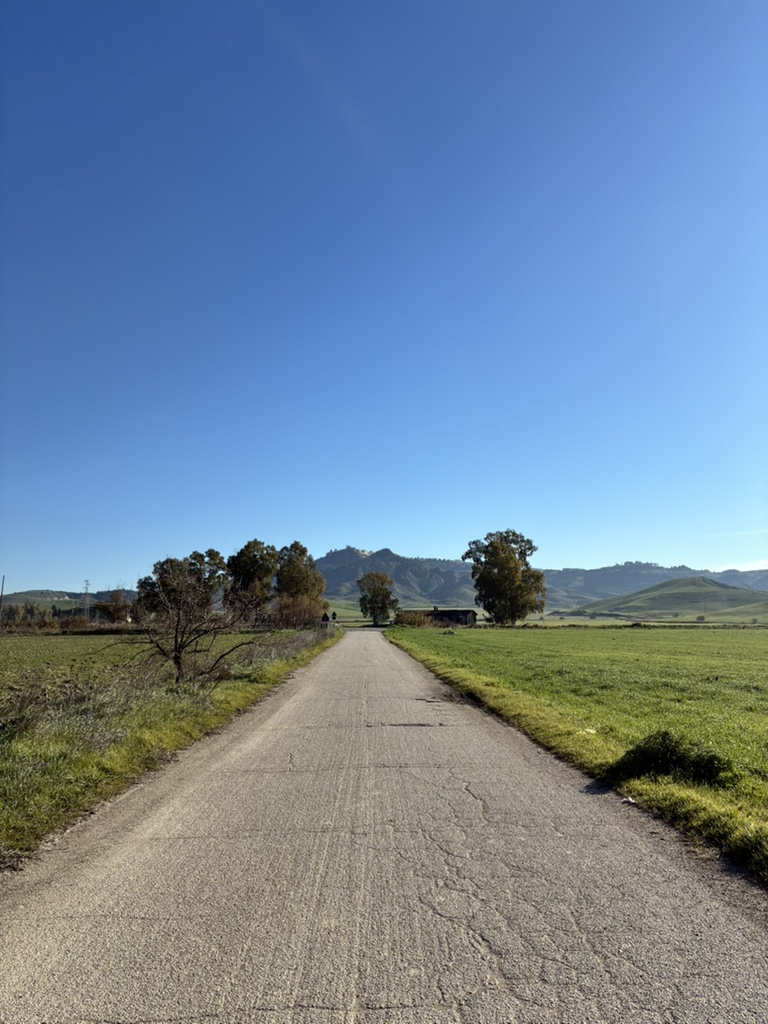
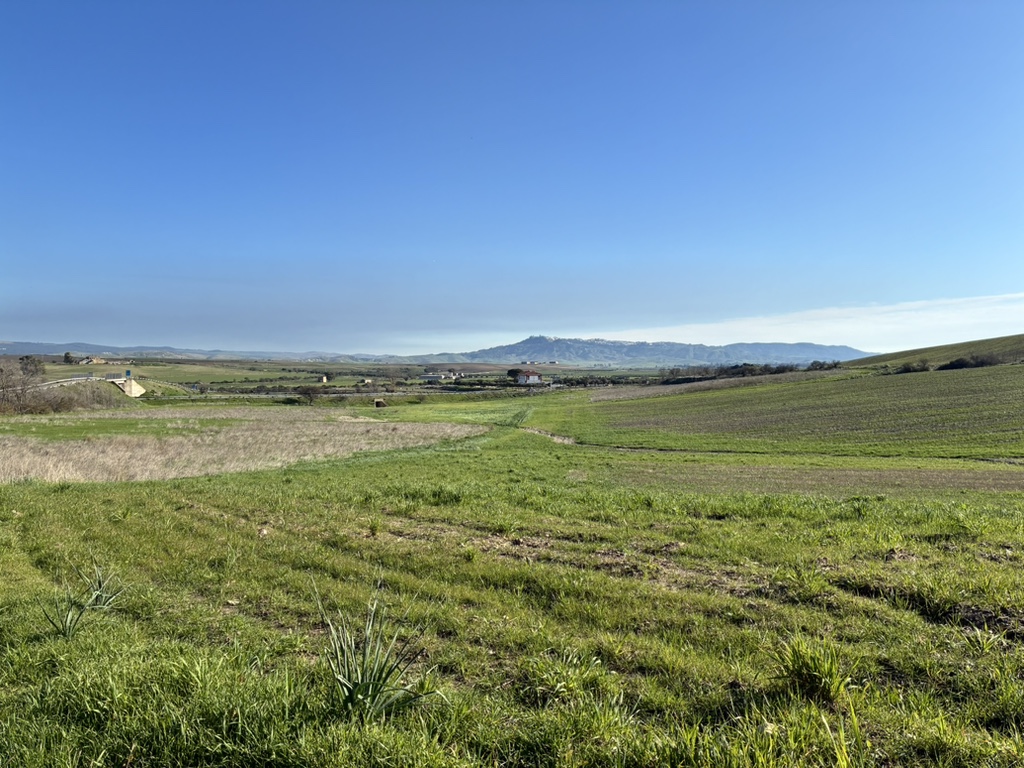
The way out of Montescaglioso is, of course, downhill, and within a few kilometers you reach the plain. The landscape opens up wide, with Montescaglioso always visible behind, as well as the day’s destination, Pomarico, and the other towns I’ll visit in the days ahead.
Throughout the entire day, I don’t cross paths with a single soul and only find one water source, toward the end of the route.
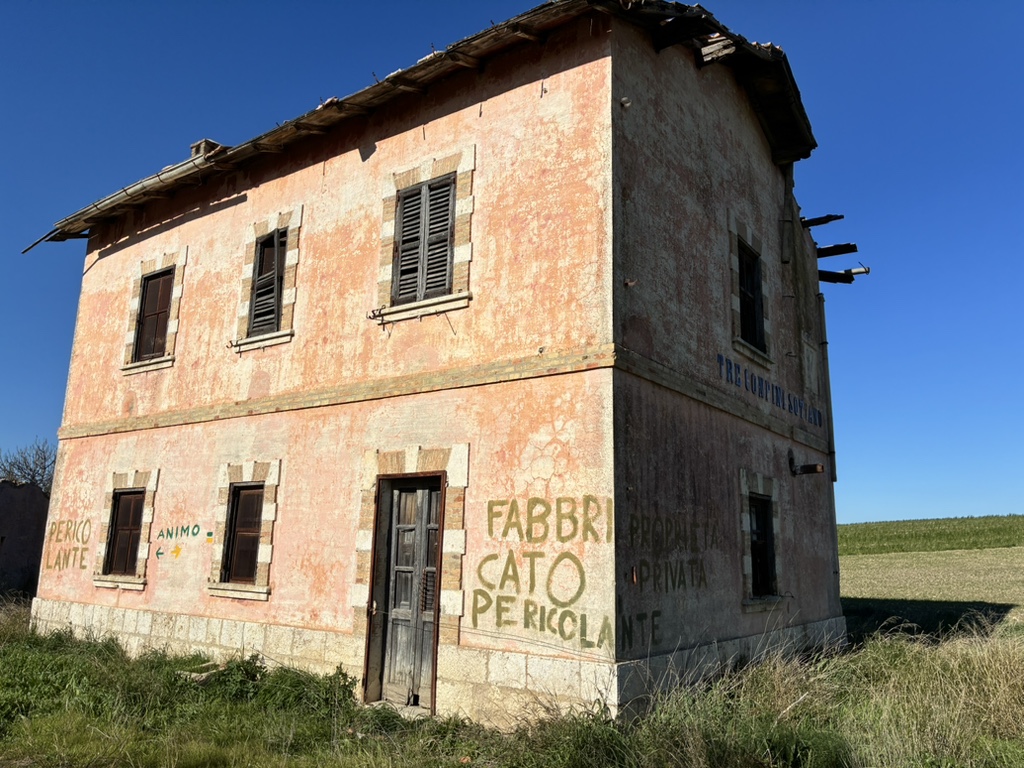
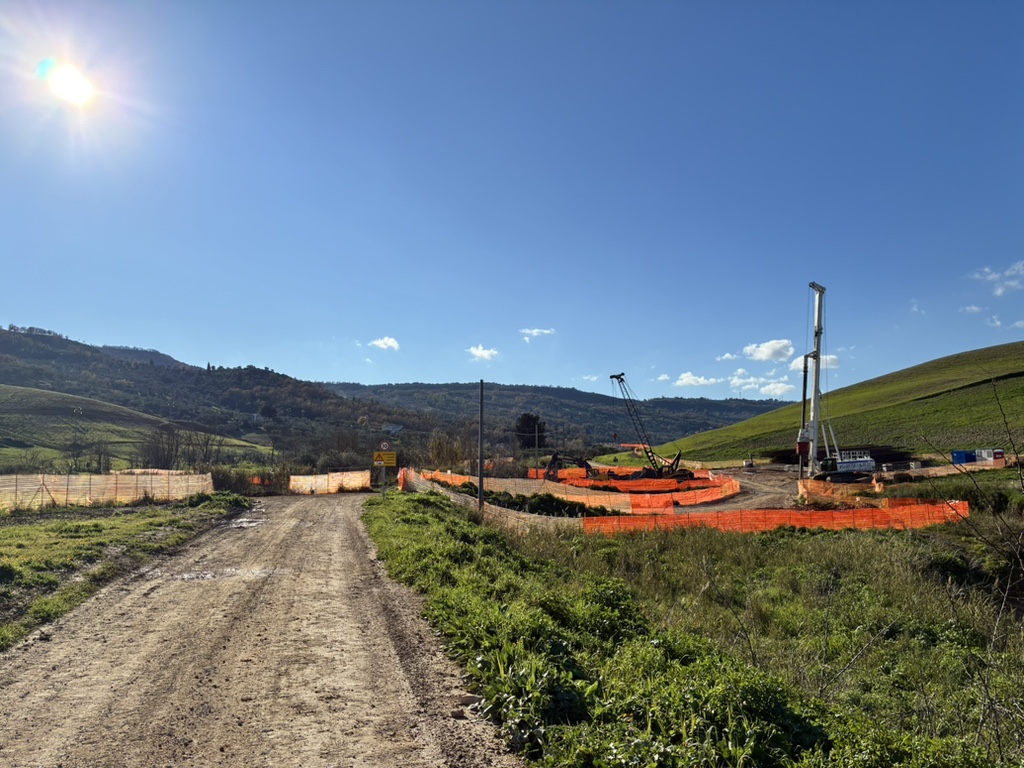
After about ten kilometers, the path starts climbing gently again, passing a couple of old stations on the Matera/Montalbano Jonico railway line. Just before the more demanding uphill section begins, I pass by a large construction site, which turns out to be the building of a new railway stretch connecting Matera to Ferrandina (according to the schedule, it should be ready in 2027… but who knows).
When the ascent gets serious — roughly after 15 km — the real challenge isn’t so much the gradient, but rather the clay soil turned muddy by rains from a few days earlier. The ground is uneven, and in some spots “crevasses” have opened up in the earth that require a bit of care to cross. Nothing dangerous, since the day is fortunately splendid, but in case of rain I’d advise carefully considering whether to tackle this stage, as you might find yourself in difficulty in certain sections.
In these areas, there’s no path signage — and for good reason, as it’s truly hard to find anything to paint arrows on: you’re in a sort of clay “gorge” with no trees or poles, and the trail is discernible only thanks to the rut left by some agricultural vehicle. Having your phone with the GPS tracks is practically essential if you don’t want to risk going the wrong way.
The real climb ends before reaching the town, with a final 4-5 km stretch leading to Pomarico’s entrance featuring no significant elevation changes.
Pomarico: the uninhabited historic center and the new part
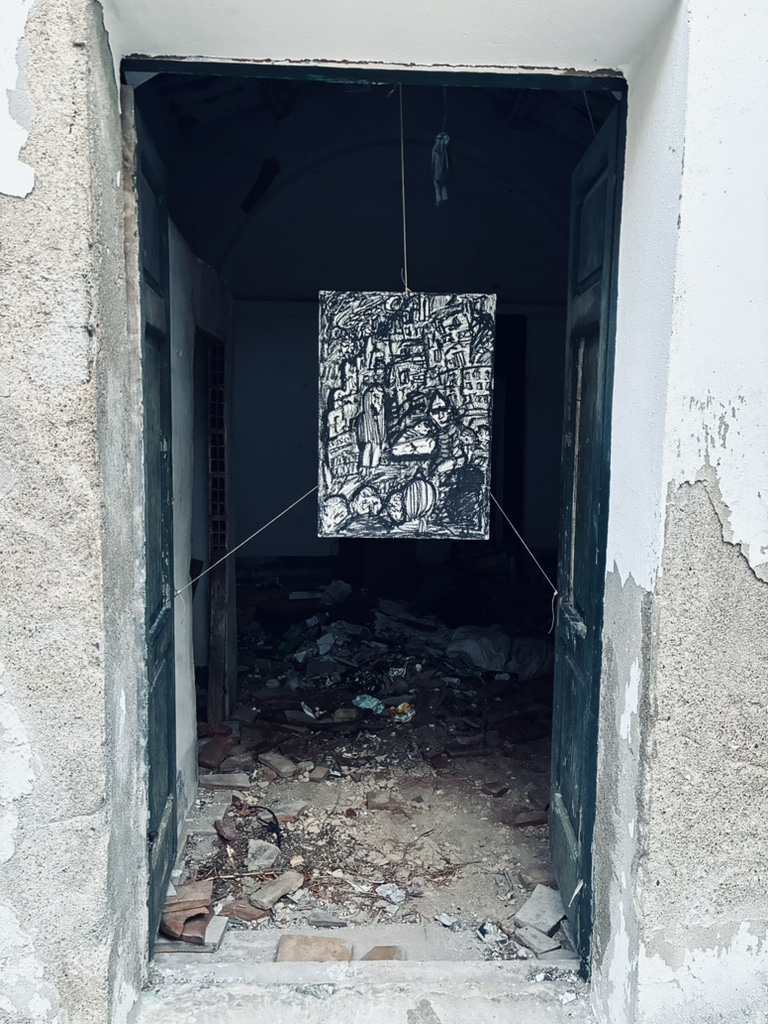
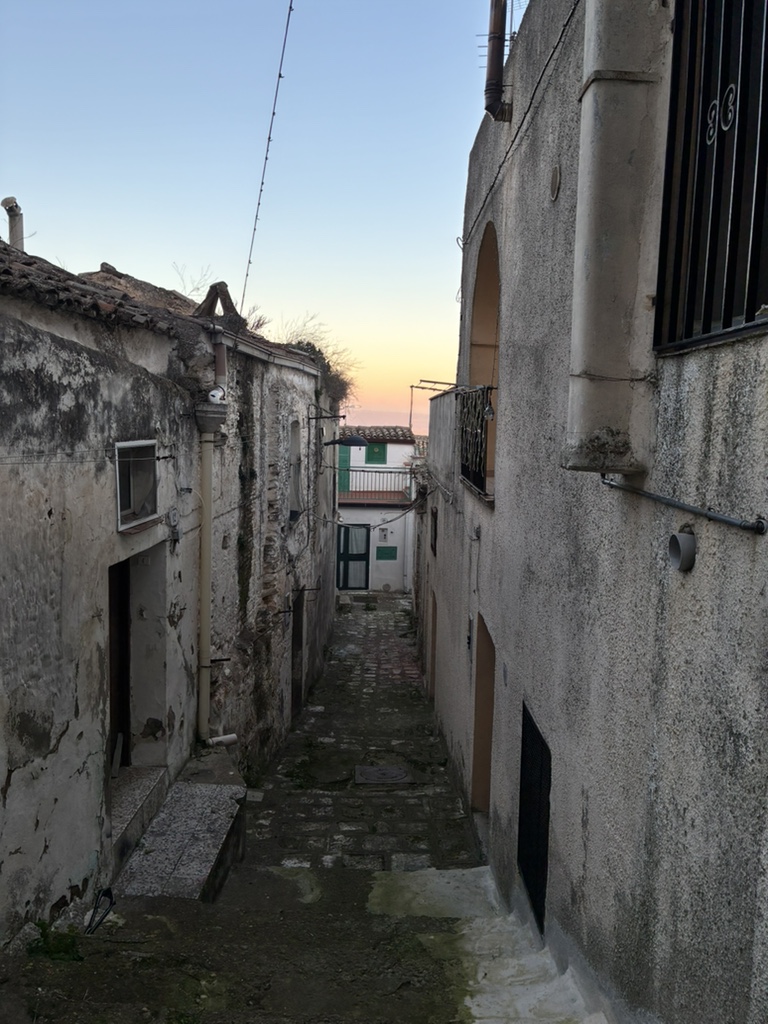
Pomarico has a historic center perched on the hilltop. To reach it, once you’ve entered the town, you need to squeeze a few more minutes out of your legs and venture into the alleyways that become increasingly narrow and inaccessible. The houses lower down are still partly inhabited, some renovated, and accessible by car. As you proceed upward, it immediately becomes clear that hardly anyone remains in the upper part, as evidenced by the large number of barricaded or broken-down doors revealing gutted interiors full of rubble.
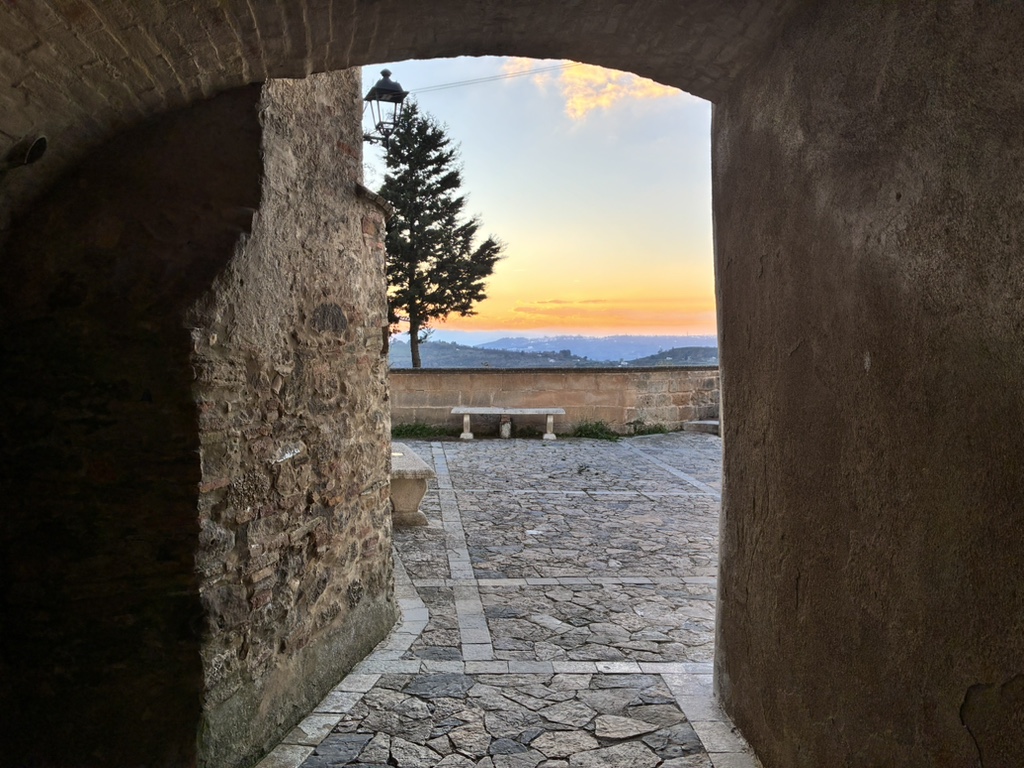
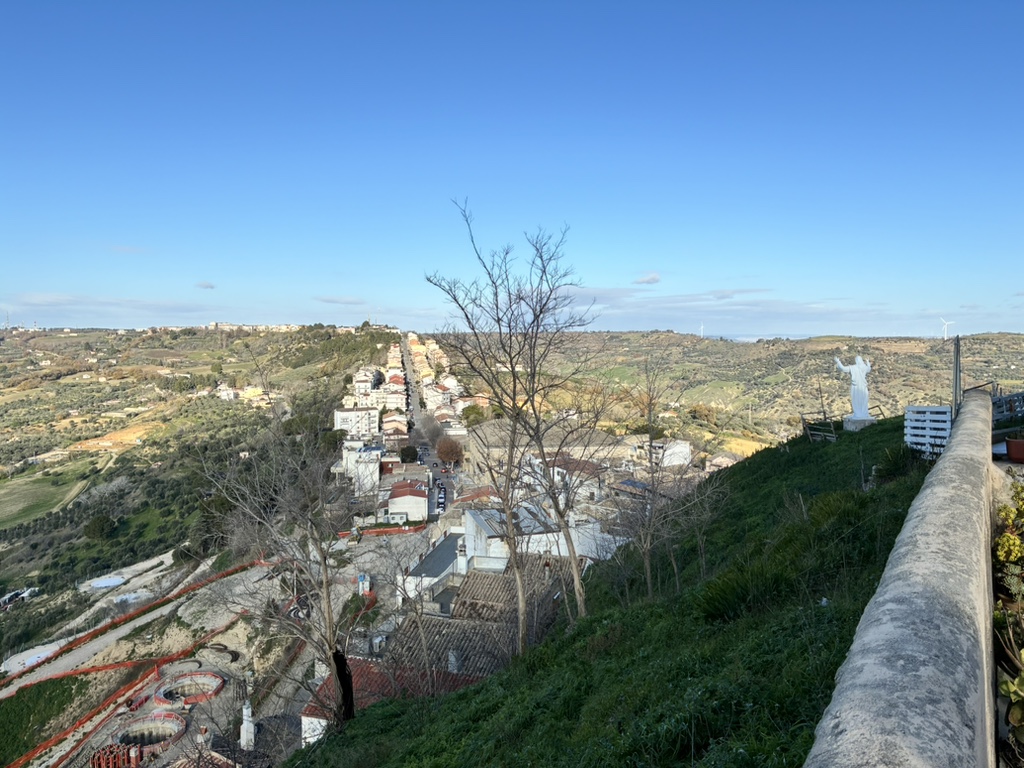
Nevertheless, wandering through the little side streets holds great charm, with stunning views appearing almost suddenly. From up there, depending on the direction you walk, you reach 360-degree vantage points overlooking the entire surrounding area, including the newer part of town stretching out below — where most Pomaricani evidently live today — made up of more modern houses and apartment buildings.
Overnight lodging is at Gianni’s house with his family, who tells us about his work as a distiller and prepares an excellent, abundant dinner made with local products, stories, and anecdotes.